
A blank chat is a stranger. It does not know what you do, who you write for, or that you hate a paragraph when a line would do. So it gives you a generic answer and you spend the first three messages fixing that. The trick is to tell it once, in a place it keeps, so you never type it again. There are two such places, and a block below that fits both.
Make Claude remember you by setting your context once, either in Memory so it carries across every chat, or in a Project so every chat in that folder starts already knowing who you are.
The two places Claude keeps what you tell it
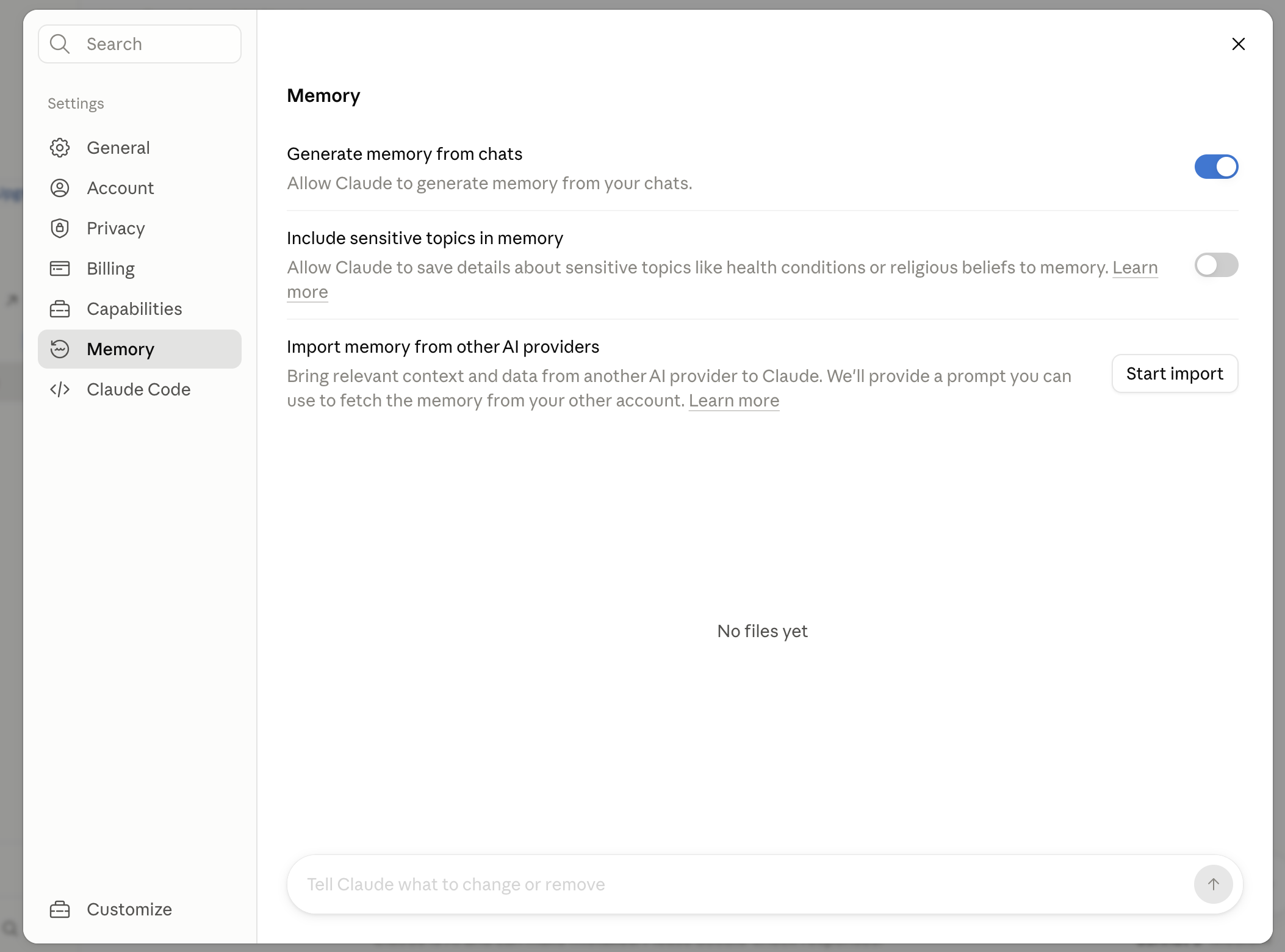
- Memory, for the things that are always true. Open Settings and find Memory. With it on, Claude holds on to useful details about you across chats, so your job, your style and your rules follow you everywhere. Best for the facts that never change no matter what you are working on.
- A Project, for one kind of work. A Project is a folder of chats that share the same instructions and files. Make one, paste your context into its instructions once, and every chat you start inside it begins already set up. Best when you want a fixed brief for a specific job, like all your client emails, kept separate from everything else.
- Fill in the block below, not a vague sentence. "I am a small business owner" tells Claude almost nothing. "I run a two-person bakery and write our Instagram captions and supplier emails" tells it what to actually do. The more real the block, the less you correct afterwards, because it is matching your life instead of guessing at it.
- Keep anything sensitive out of it. This is context, not a vault. Leave out passwords, bank details, client names you would not want repeated, anything private. You are setting who you are and how you like replies, not handing over secrets.
- Check it took, then move on. After you save it, start a fresh chat and ask "what do you know about me so far". If it plays your context back, it is working. If it is thin, add the missing line and you are done, no need to babysit it after that.
Your profile block
Fill in the brackets once. Paste it into a Project's instructions, or drop it into a chat and say "remember this about me" so Memory keeps it. The brackets are the whole point, so do not skip them.
Here is who you are working with. Remember this and use it in everything you do for me.

About me: [YOUR JOB OR SITUATION IN ONE OR TWO LINES. For example: I run a two-person bakery and do all the admin myself. Or: I am a project manager at a software firm and I write a lot of updates for non-technical people.]

The work I usually bring you: [THE JOBS YOU WILL ACTUALLY DO HERE. For example: supplier emails, Instagram captions, planning my week, turning messy notes into something clear.]

Who my writing is for: [WHO READS IT. For example: customers who are not technical, my team, my landlord, people scrolling past on their phone.]

How I want you to reply:
1. Answer first, reasoning after, only if I need it. Do not warm up.
2. Plain words. If a normal person would not say it out loud, do not write it.
3. Ask me a question only when the answer would change what you produce. Otherwise make a sensible choice and tell me what you assumed.
4. Never invent a fact, a number, a name, a price or a source. If you do not know, or I have not told you, say so and leave a gap for me to fill.
5. When you finish something I might send or publish, add one short line at the end naming the part you are least sure about.

Things I never want: [YOUR NO LIST. For example: no emoji, no hashtags, no exclamation marks, no long preamble, no American spelling.]

If you have understood, reply with one short line and then wait for my first task.
Where the line is
- The honest bit: it only knows what you put in. Memory is not a mind reader and not magic. If a detail is not in the block or something you have told it, it does not have it, so when your situation changes, update the block.
- Keep it as context, never a safe. Anything private or sensitive stays out. This is for who you are and how you like replies, not for secrets you would not want repeated.
Do it once, today
Do not overthink the wording. Fill in the block for the version of you that shows up to most chats, paste it into a Project or save it to Memory, then start a fresh chat and ask it what it knows about you. Two minutes, and you have bought back the first three messages of every chat from here on.
Switching over from ChatGPT and have context saved there already? Next up is how to bring your ChatGPT memory into Claude, so you do not start from scratch.